
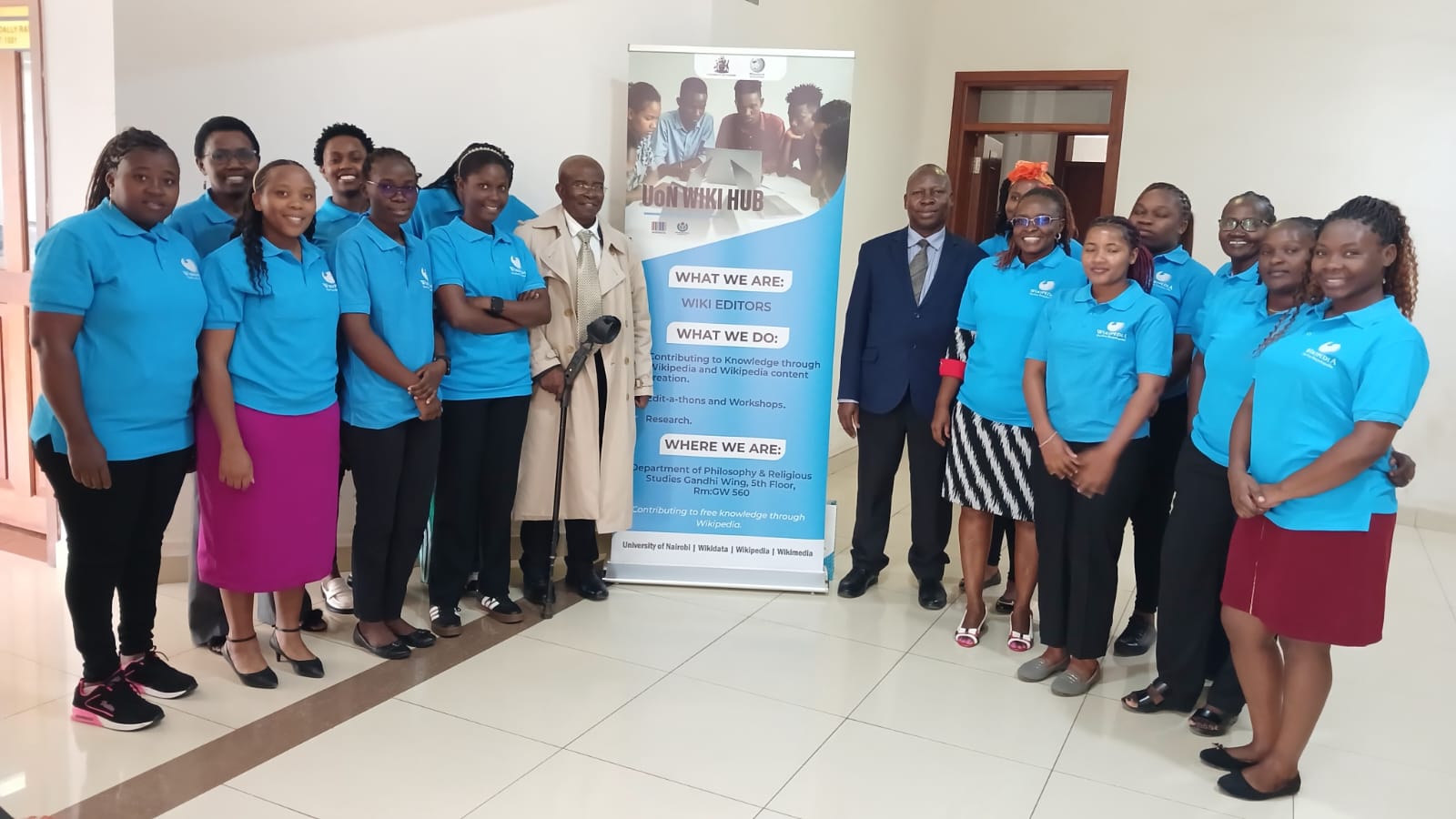
Yesterday, June 9, 2026, marked a quiet but deeply significant milestone for our community at the University of Nairobi.
If you walked past the Department of Philosophy and Religious Studies, you might have caught the buzz surrounding the official launch of our new physical Wikipedia editing and training hub. Led by my esteemed colleague, Dr. Telesia K. Musili, and made possible through the generous support of the Wikimedia Community Fund, this hub is more than just a room with computers. It is a space where our students and faculty transition from being mere consumers of global information to being the authors of our own stories.
Bridging the Digital Knowledge Gap
We live in a deeply digitalized world, yet if you spend an hour searching the internet for deep insights into African philosophy, local historical figures, or regional religious movements, you will quickly notice a glaring gap. Much of the world's digital knowledge is written about Africa, but not by Africans.
Wikipedia is the world's go-to encyclopedia. When people want a quick, reliable overview of a topic, it’s the first link they click. By establishing a physical space right here on campus, we are tackling this imbalance head-on. This hub gives our university community the practical tools, stable internet, and collaborative environment needed to document, preserve, and publish our rich cultural and academic heritage.
Mentorship, Skills, and Career Growth
For our students, the benefits go far beyond learning how to format a wiki page. Participating in digital knowledge creation builds critical skills that employers look for today:
-
Rigorous Fact-Checking: Learning how to cite sources up to global encyclopedic standards.
-
Digital Literacy: Mastering content management systems and collaborative online tools.
-
Neutral, Clear Writing: Writing for a global audience requires clarity, objectivity, and precision.
Faculty members will also find this a powerful space for public scholarship. Our research shouldn't just sit in closed academic journals; it deserves to be accessible to a curious high schooler in Kisumu or a researcher in Tokyo.
Focusing on Underserved Narratives: The Circle of Concerned African Women
A core inspiration for this initiative is closely tied to a vital movement in African academia. The hub will heavily support the preservation of stories related to African women who have shaped our social, religious, and philosophical landscapes.
We are actively working in tandem with the global community to build out comprehensive records of these contributions. You can see the groundwork of what we are building by checking out our official project space: https://en.wikipedia.org/wiki/Wikipedia:WikiProject_Kenya_Circle_of_Concerned_African_Women.
How to Get Involved
The beauty of a Wikipedia hub is that it thrives on collective effort. You do not need to be a tech expert or a published professor to contribute. Whether you want to correct a typo on a page about Kenyan history, translate an article into Kiswahili, or write a biography for an unsung hero from scratch, your voice matters.
We invite all undergraduate students, postgraduates, and faculty members to drop by the Department of Philosophy and Religious Studies. Let’s stop waiting for others to write our history. Let’s write it ourselves.
For regular updates on training schedules, editing workshops, and upcoming edit-a-thons, please visit the department office or join our community via the WikiProject link above.
- Log in to post comments