
Step out onto the streets of Nairobi today, and you will see a city caught between immense promise and existential strain. From the bustling stalls of Gikomba to the lecture halls of the University of Nairobi, our conversations are no longer just about the economy or politics they are about the weather. We talk about the erratic rains that flood our informal settlements, the scorching dry spells that drive up the price of sukuma wiki, and the heavy toll environmental degradation takes on our families.
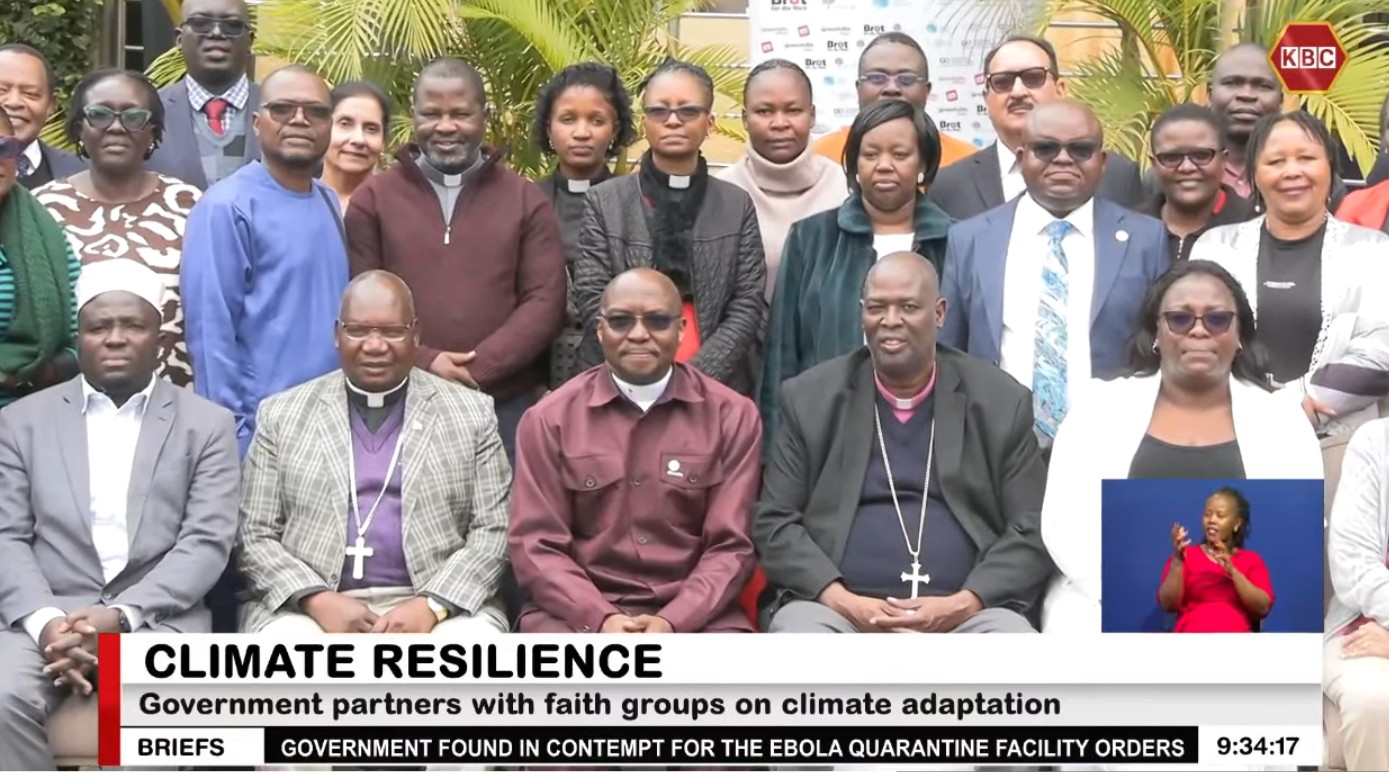
As captured vividly in the recent national broadcast, it highlights a landmark partnership between the government and faith groups on climate adaptation, our nation is realizing a fundamental truth: climate resilience cannot be achieved in a vacuum. It requires a moral anchor.
For too long, the climate conversation has been confined to international summits, carbon metrics, and policy frameworks that feel completely detached from the ordinary Kenyan. But as an academic and a person of faith, we argue that the most potent weapon we have against environmental degradation isn't found in a textbook or a boardroom. It is found in our shared places of worship.
The Fabric of Nairobi: Where Faith Meets the Ground
Nairobi is a deeply spiritual city. On any given Friday, our mosques are overflowing for Juma'ah prayers. On Saturdays and Sundays, our churches echo with praise and worship. Our religious institutions are not just buildings; they are the strongest social networks we possess. When disaster strikes whether it is a devastating fire in Kibra or flash floods blocking the roads in South C people do not wait for a government directive. They turn to their local church, their local mosque, or their community temple.
Because faith leaders hold the trust of the people, they possess a unique power to drive behavioral change.
-
The Power of Shared Stewardship: In Islam, the concept of Khilafah teaches us that humans are appointed as guardians (Khalifah) of the Earth, tasked with protecting Allah’s creation. Similarly, Christian scriptures call for faithful stewardship of the land. When we reframe environmental protection not as a "secular government project," but as a profound spiritual duty, the response shifts from compliance to devotion.
-
Practical, Localized Action: Imagine the impact if every church compound, mosque, and temple in Nairobi committed to rainwater harvesting, solar energy transition, or community clean-ups. By transforming houses of worship into models of green energy and sustainability, we create living classrooms for our neighborhoods.
Bridging the Gap: Academic Insight and Grassroots Reality
At the University of Nairobi, we analyze data, study climate trends, and debate policy. But data alone does not change human behavior. Logic can convince the mind, but faith moves the heart.
The partnership highlighted represents the exact synergy we need. When the government provides technical resources and policy backing, and interfaith groups provide the moral authority and community mobilization, we bridge the gap between high-level strategy and real-world impact.
This collaborative approach allows us to address the unique vulnerabilities of our city:
-
Defending the Vulnerable: Climate change is inherently unjust. The people who contribute the least to global emissions—like those living in Nairobi's informal settlements—suffer the most from its consequences. Our faiths demand that we stand with the marginalized, making climate justice a core humanitarian mission.
-
Restoring Our Green Spaces: From the Karura Forest to the Nairobi River, our city's natural lungs need healing. Interfaith youth coalitions can champion tree-planting initiatives and waste management drives, turning environmental restoration into a unifying civic ritual.
A Call to Action for Nairobi’s Faith Leaders
We must move beyond merely offering prayers during times of drought and flooding. While prayer is our foundation, action is its truest expression.
we call upon our fellow religious leaders, scholars, and policy-makers across Nairobi to step up. Let us integrate environmental education into our sermons, madrasas, and Sunday schools. Let us use our platforms to hold leadership accountable for environmental negligence, and let us actively collaborate across theological lines to protect our common home.
Nairobi is known as the "Green City in the Sun." Whether it keeps that name for future generations depends entirely on what we do today. Let us answer the call, not just as citizens of Kenya, but as stewards of creation.
- Log in to post comments