
As an academic rooted in philosophy and religious studies, I often reflect on how the values we teach in higher education institutions like the University of Nairobi translate into our foundational schooling systems. Academic excellence cannot thrive in an environment devoid of peace, mentorship, and structured communication.
Recently, I had the privilege of attending the Speech and Prize Giving Day at the historic Kenya High School. The event, which celebrated the exceptional achievements and discipline of the graduating class, served as a crucial forum for national educational leaders to address pressing issues facing our schools today—most notably, the recent wave of student unrest across the country.
Pictured at the center of this milestone event is Amb. (Prof.) Julius K. Bitok, CBS, PhD, who addressed the gathering in his capacity as the Principal Secretary, State Department for Basic Education. Amid growing national concerns over isolated fire incidents and disruptions in boarding schools, his message to parents, teachers, and stakeholders was clear and reassuring: learning must continue uninterrupted, and disputes must be settled through engagement, not destruction.
Key safety and structural measures highlighted by the Principal Secretary include:
-
The Power of Dialogue: Schools must actively create channels to engage students and address concerns that create anxiety, rather than compelling them to sit for high-stakes assessments or mock examinations when they are unprepared.
-
Nationwide Safety Inspections: To safeguard student welfare, the ministry has increased its Quality Assurance Officers from 600 to 1,000, deploying them for a rigorous nationwide inspection of boarding facilities.
-
Stability of the School Calendar: He reassured the public that the vast majority of Kenya's secondary schools remain completely stable and safe.
Hearing this perspective reinforced my conviction that the philosophical principles of dialectic and peaceful dispute resolution are not just abstract university modules; they are practical, urgent survival tools for our basic education ecosystem.
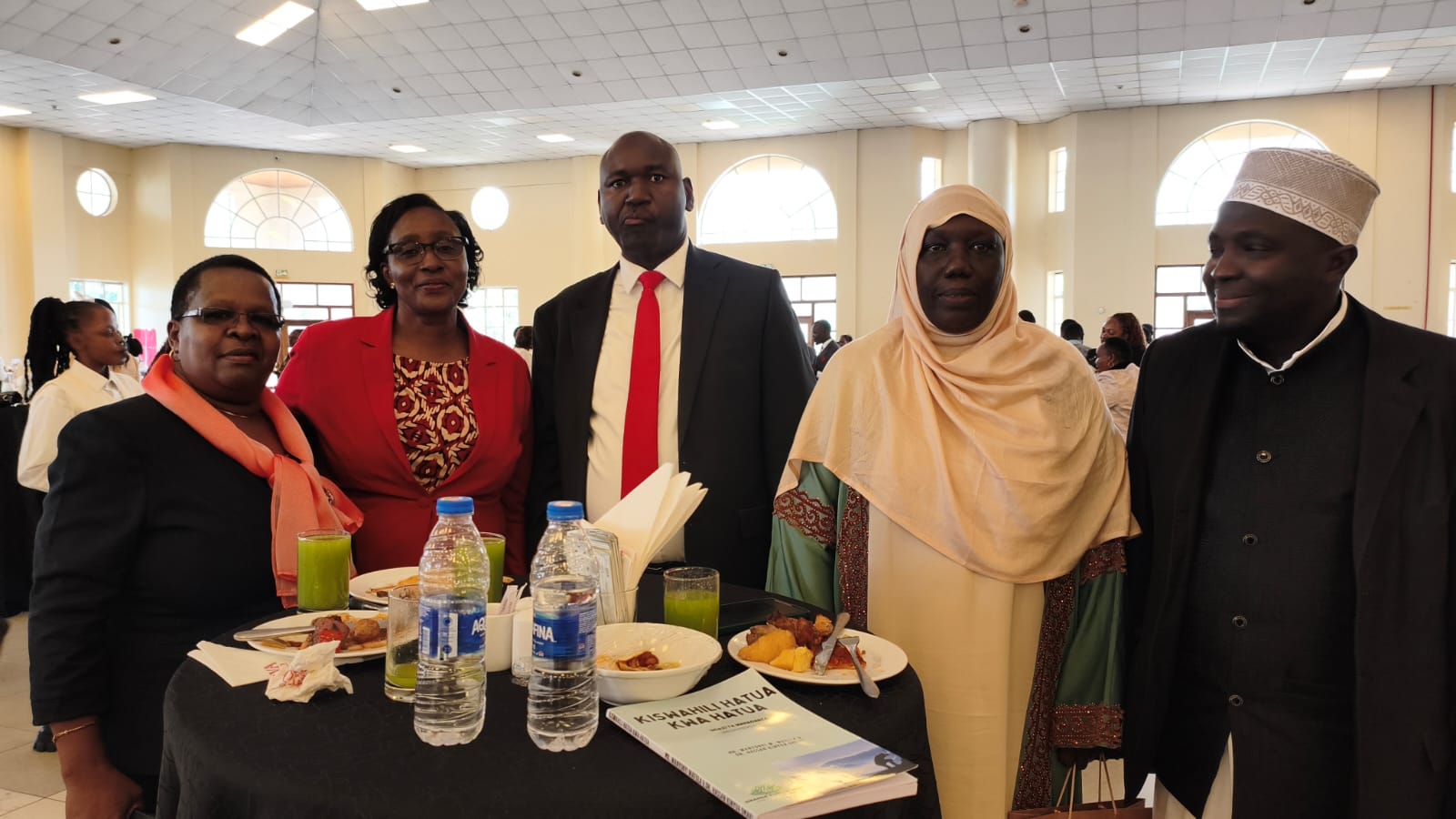
The event was also graced by Dagoretti North Member of Parliament, Hon. Elachi Beatrice Kadeveresia (seen second from the left in our commemorative photos), whose constituency encompasses the school. Hon. Elachi commended Kenya High School for its long-standing tradition of shaping young women into responsible, resilient national leaders.
She pointed out that as demand for high-quality education grows—with tens of thousands of students selecting Kenya High School as their top choice—there is an urgent need for collaborative infrastructure development. For us at the University of Nairobi, institutions like Kenya High School are vital pipelines feeding disciplined, brilliant minds into our lecture halls.
During the fellowship session at the event, we had the opportunity to look closely at tools that can build better communication and emotional intelligence among our youth. Language is the ultimate vehicle for dialogue, which is why structural learning remains so close to my heart.
At our table, we showcased the book series Kiswahili Hatua kwa Hatua (co-authored by Mr. Wenslaus Wafula Wanyonyi and myself).
A Note on Communication: Programs that empower students to express their frustrations, combined with structured language proficiencies, lay the groundwork for effective peer-to-peer and student-to-administration communication. When students have the vocabulary and the channels to negotiate their challenges hatua kwa hatua (step by step), the temptation to resort to chaotic actions diminishes significantly.
The success of Kenya High School under the leadership of Chief Principal Rev. Edith Koech proves that when discipline matches academic rigor, institutions flourish. However, keeping our schools safe and stable is not a task for the Ministry of Education alone. It requires an active partnership between the state, local leadership like Hon. Elachi Beatrice Kadeveresia, the community, and higher education experts.
As faculty at the University of Nairobi, we remain committed to offering the ethical frameworks, research, and mentorship pipelines necessary to support our basic education sectors through these transitional periods. By prioritizing dialogue, upgrading our quality assurance metrics, and focusing on holistic student welfare, we can ensure that our schools remain safe havens for intellectual growth.
- Log in to post comments