
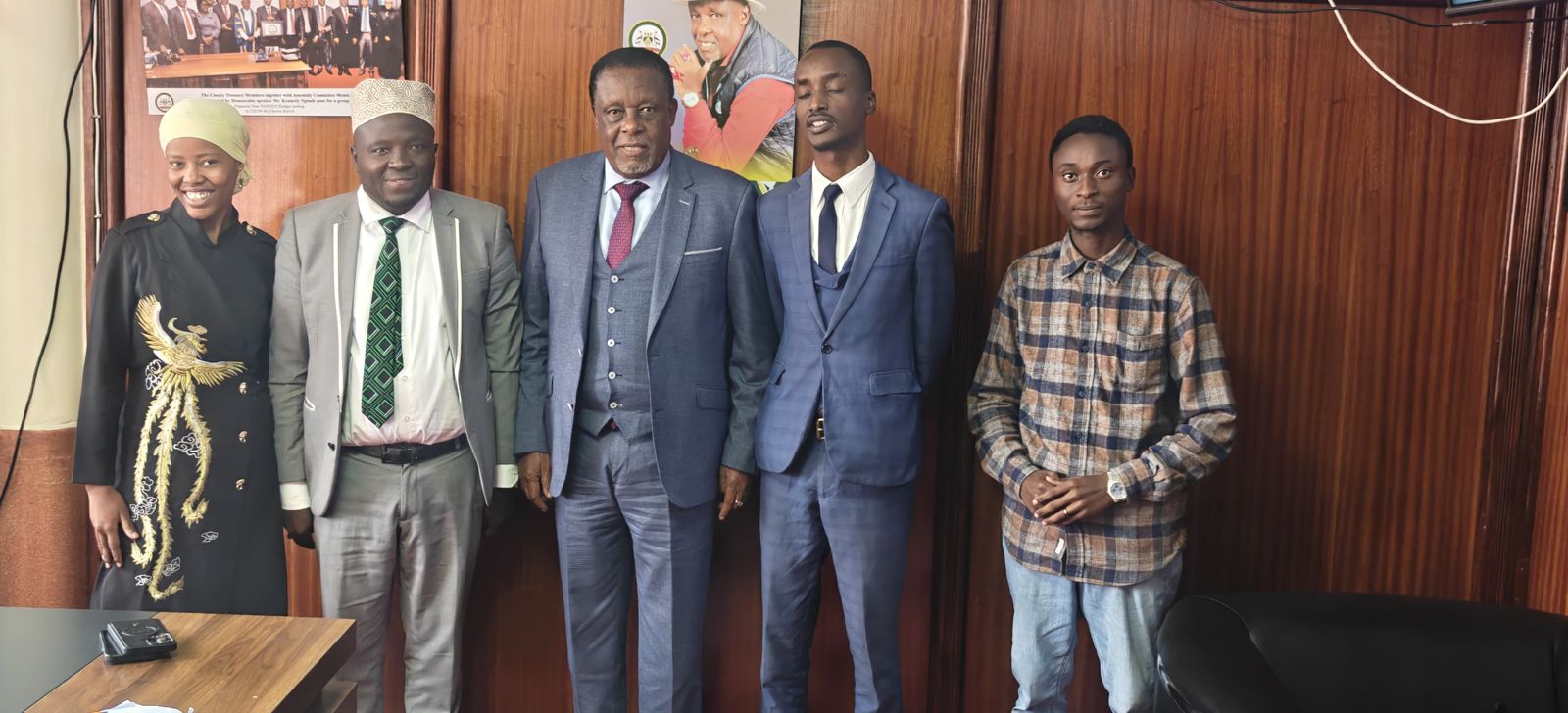
On June 23, 2026, Dr, Sheikh Hassan Kinyua Omari, the chairman anti corruption and complaints committee, also lecturer, Philosophy and religious studies department, had the privilege of holding a highly productive consultative meeting with Hon. Paul Kados Kiguathi, the Deputy Speaker of the Nairobi County
Assembly and Member of County Assembly (MCA) for Mihang'o Ward. Hosted at his
Nairobi City Hall office, the discussions focused intensely on two pillars critical to the
structural evolution of our capital: expanding high-quality educational access and
designing sustainable youth empowerment frameworks.
As both a lecturer at the University of Nairobi and the Chairman of the Corruption Prevention
and Complaints Committee, Dr Hassan's daily interactions span the realities of academic research,
student challenges, and the institutional frameworks required to safeguard public trust. Moving
our youth from vulnerability to economic independence requires breaking down the silos
between higher education institutions and local government policymakers.
Bridging Academia and Local Governance
For too long, universities and county assemblies have operated on parallel tracks, rarely merging
talent with policy execution. During the session, Hon. Paul Kados and the team examined actionable
methods to leverage institutional knowledge from the University of Nairobi directly into
community development projects within Mihang'o Ward and across the broader Nairobi region.
Hon. Kados brought valuable practical perspectives from his long-standing legislative and leadership experience at City Hall. The meeting identified a pressing need to move past traditional, short-
term youth workshops and instead establish formal pipelines for technical skills transfer, structured professional internships, and targeted mentorship programs. By building these direct
pathways, we can ensure that young graduates and skilled artisans are actively prepared to meet
the demands of our modern local economy.
"True youth empowerment is not a product of spontaneous initiatives. It demands systematic
legislative support, targeted resource allocation, and a foundation built on transparency and
absolute institutional integrity."
Integrity as the Foundation for Development
A central theme of the dialogue was the critical role that transparent governance plays in
protecting public programs. From the perspective leading efforts in corruption prevention, we
emphasized that youth and educational initiatives fail when oversight is weak. When bursary
disbursements, vocational training grants, and public youth funds are managed with total
transparency, community trust is restored, and the impact of every shilling is multiplied.
Hon. Kados shared his firm commitment to enhancing oversight mechanisms within the Nairobi
County Assembly. We agreed that anti-corruption frameworks must be embedded directly into
the design of county youth programs, ensuring that opportunities are awarded strictly on merit
and actual need rather than political alignment or personal influence.
A Scalable Roadmap for Nairobi's Wards
The ideas discussed during our City Hall meeting will serve as a foundational baseline for
broader community outreach. Our objective is to design a scalable model in Mihang'o Ward and the entire Nairobi County that effectively pairs educational resources with local legislative support. This includes maximizing the impact of community social spaces, boosting the performance of local technical training
centers, and creating clear, accessible mentorship networks for young entrepreneurs.
Transforming Nairobi into a city of shared prosperity requires persistent collaboration across
institutional lines. By combining the policy-making authority of leaders like Hon. Paul Kados
Kiguathi with the strategic insights of academic and accountability bodies, we can construct an
environment where Nairobi's youth possess the skills, integrity, and backing to lead our communities forward.
- Log in to post comments